Build a Pool

Home
May 13, 2026
High Filter Pool Pressure After Opening: Is That Normal?

Ever pulled the cover off your pool after winter and noticed the pressure gauge reading higher than usual? That moment of “wait, is something wrong?” hits a lot of pool owners every spring. High filter pool pressure after opening is actually very common.
Your filter is working hard to clear out months of built-up debris, dead algae, and pollen. I’ll walk you through exactly what’s happening and the simple steps to get your pool system back on track.
What Is Considered High Filter Pool Pressure?
Your pressure gauge tells you a lot about your pool’s health. Before you can spot trouble, you need to know what normal looks like for your specific setup.
Understanding Normal PSI Ranges
Every pool filter has a baseline pressure, and knowing that number matters a lot. Pressure gauges measure in PSI (pounds per square inch) and tell you how hard your filter is working. Most residential pool filters run between 10 and 20 PSI under normal conditions.
Different filter types settle at different pressure ranges. Here’s a quick breakdown:
| Filter Type | Normal PSI Range | Key Notes |
| Sand Filters | 15-20 PSI | Higher baseline pressure; requires regular backwashing |
| DE Filters | 12-18 PSI | Moderate pressure; very efficient filtration capability |
| Cartridge Filters | 8-15 PSI | Lower pressure; needs rinsing rather than backwashing |
Finding your filter’s specific baseline takes a bit of detective work. Check your equipment manual or look up the manufacturer’s specs for your exact model. Then record that clean pressure reading right after your filter is freshly serviced. That number becomes your personal reference point for everything else.
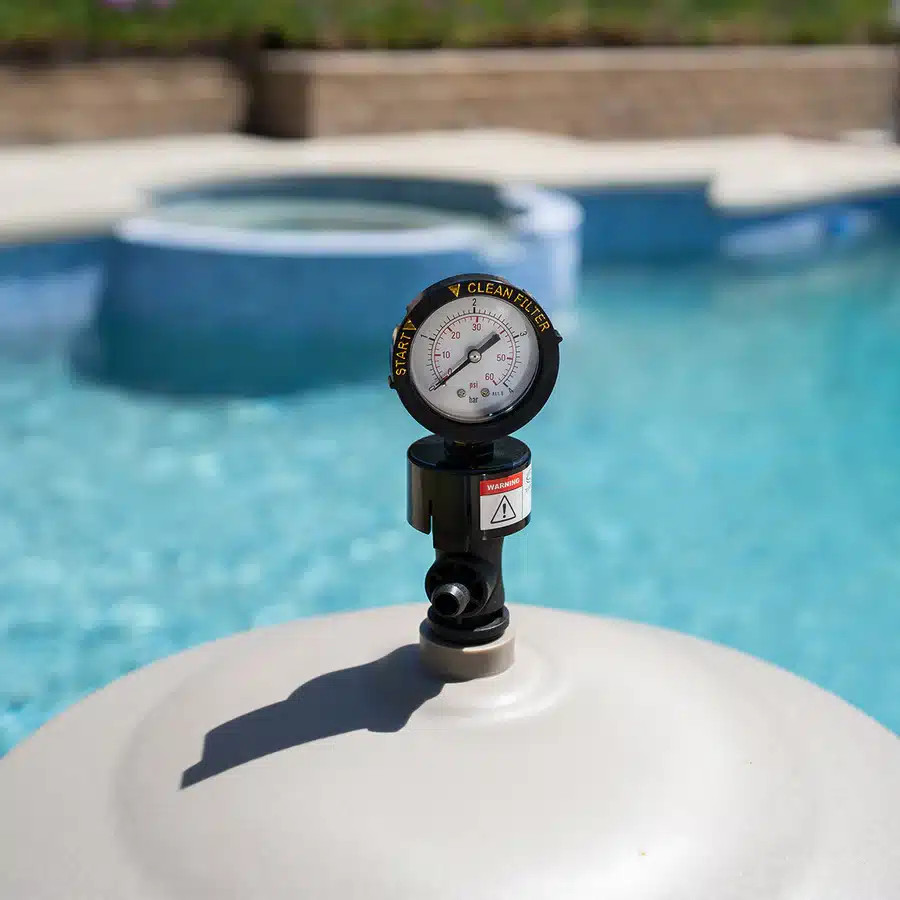
Image Credit: xtremepowerusa.com

The 10 PSI Rule for Action
High pressure is defined as 7 to 10 PSI above your normal operating pressure. That’s where the 10 PSI Rule comes in, and it’s your clearest signal that action is needed.
Once your filter climbs 10 PSI past its baseline, water circulation suffers and filter efficiency drops significantly. Here’s what those thresholds look like in practice:
- Sand filter normally at 18 PSI? Readings of 25 to 28 PSI signal a problem.
- Cartridge filter normally at 10 PSI? Hitting 18 to 20 PSI means it’s time to clean.
- DE filter normally at 15 PSI? Readings above 22 to 25 PSI need immediate attention.
Backwashing or cleaning your filter becomes necessary at this threshold. According to a 2026 filter management guide by ProTuff Products, running a pool filter 8 to 10 PSI above its clean baseline forces the pump motor to work against severe back-pressure. This generates excess heat and significantly accelerates motor wear. Catching that spike early protects your equipment from breaking down ahead of schedule.
Most pool owners notice this pressure jump most in spring. Your filter works hardest during pool opening week, and the gauge shows it.
Common Causes of High Filter Pressure After Pool Opening
Several things can push your pressure gauge higher after opening. Knowing which one you’re dealing with makes fixing the problem a lot faster.
Dirty or Clogged Filter Media
This is the most common culprit right after opening. Your filter media accumulates debris, dead algae, and pollen over winter, and all of it creates resistance when water tries to push through.
Microscopic “dead algae dust” and pollen can clog filter media in a matter of hours. This explains why your pressure might drop after a backwash but shoot right back up within the same day. It’s not a broken system. It’s simply the volume of fine particles your filter is catching all at once.
Backwashing removes trapped debris and restores proper water circulation. You’ll see the pressure drop noticeably after a good cleaning cycle.
If pressure stays high even after backwashing, you may have internal damage or stubborn clogs that need deeper attention. A later section covers exactly how to diagnose that.
Heavy Organic Load or Debris in the Pool
Leaves, twigs, dead algae, and other organic matter settle on the pool floor over winter. When you open the pool, all of that debris gets pulled toward your filter at once.
This heavy load forces your filter to work much harder. Your system is actually doing its job, but it needs some help from you to keep up.
Vacuuming to waste is your best move here. It removes the bulk of that debris without sending it through your filter, which keeps your pressure from spiking rapidly. Clean the pool bottom first before running the filter hard, and you’ll save yourself a lot of backwashing cycles.
Clogged Skimmer or Pump Basket
This one surprises a lot of pool owners, so it’s worth clearing up. Your skimmer basket and pump basket sit on the suction side of your system, positioned before the pump. A blockage there actually starves the pump of water, which causes your filter pressure to drop, not rise.
Still, you should check these baskets regularly during pool opening. Low pressure from a blocked skimmer means poor water circulation and a struggling pump. That’s just as harmful to your system as high pressure.
- Open the skimmer basket and remove any leaves, twigs, or built-up debris.
- Locate your pump basket and clear it out too, since it protects the impeller from damage.
- After clearing both, check your pressure gauge to see if readings move in either direction.
Keeping these baskets clean is a quick habit that protects your entire filtration system. A few minutes every few days goes a long way.
Partially Closed or Blocked Return Valves
Return valves control how water moves back into your pool after filtration. When they’re partially closed or blocked, your filter has to push harder to move the same amount of water.
Check each valve and turn it counterclockwise until it stops to make sure it’s fully open. You’ll usually see pressure drop quickly once water can flow freely again.
Mineral buildup or small debris can also block return line pathways after months of sitting closed. If you suspect a deeper blockage in your plumbing, testing the system without filters installed can help you pinpoint the restriction. This simple step rules out filter issues before you waste time cleaning or replacing the wrong component.
Immediate Steps to Address High Filter Pressure
You can take action right now to bring your pressure down. Start with these steps before assuming something major is wrong with your pool system.
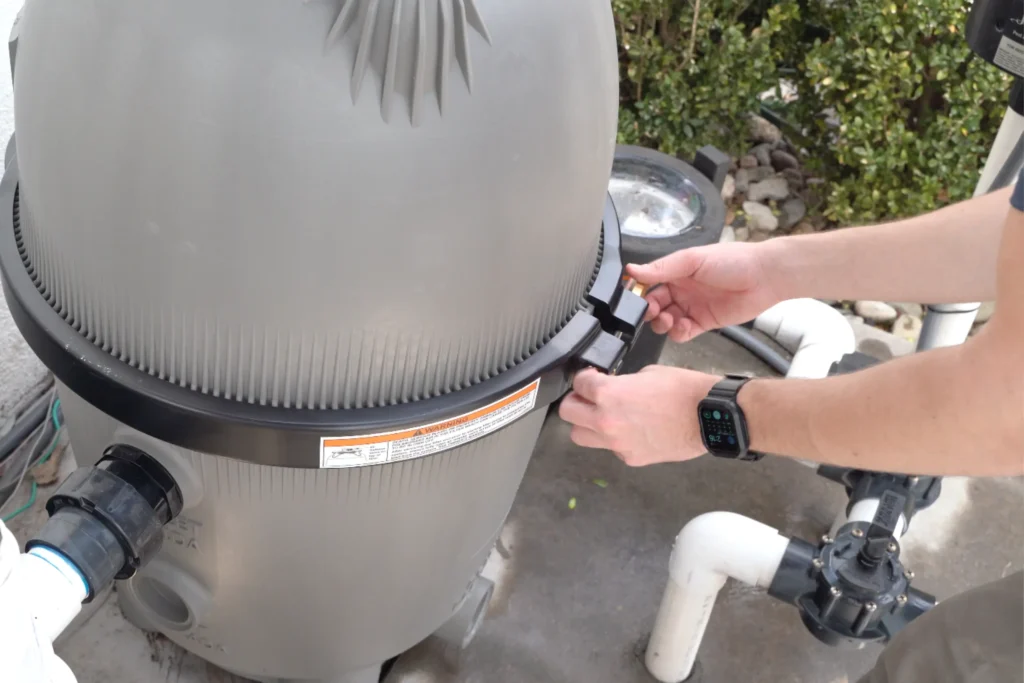
Backwash or Clean the Filter
Backwashing or cleaning your filter is the first move when pressure runs high after opening. Each filter type handles this a little differently.
- Sand filters: Switch to backwash mode to reverse water flow and flush out trapped debris from the off-season.
- DE filters: Backwash to clear diatomaceous earth and collected particles from the filter media.
- Cartridge filters: Rinse with a garden hose instead of backwashing, since they use a different filtration design.
To backwash, turn off your pump, switch the valve to backwash mode, and run the pump until the water runs clear. Then switch back to normal mode for a few minutes to reset the system. Check your pressure gauge before and after to confirm the PSI dropped back to your baseline. If pressure stays high, repeat the cleaning. Stubborn spring debris sometimes needs more than one pass.
Vacuum to Waste to Remove Excess Debris
Vacuuming directly to waste is one of the smartest moves you can make during a pool opening. It removes debris without sending it through your filter, which keeps pressure from spiking rapidly and gives your filtration system a real head start.
- Set your multiport valve to the waste position before you start.
- Connect your vacuum hose to the skimmer, then slowly move the vacuum head across the pool floor.
- Monitor the waste line to confirm water flows out steadily throughout the session.
- Stop once the water runs clear and your pressure stabilizes at normal ranges.
This method is especially useful during the opening phase when your pool faces heavy organic loads. Your filter handles less overall debris, which improves its efficiency and extends equipment life.
Use the Air Relief Valve to Release Trapped Air
After cleaning, trapped air can still linger inside your filter tank. This air causes pressure spikes and reduces water circulation efficiency throughout your pool.
- Find the air relief valve on top of your filter tank. It looks like a small handle or knob.
- Turn it counterclockwise slowly to release trapped air from inside the filter.
- Stand to the side. Water or air will shoot out once you crack it open.
- Listen for a hissing sound, which tells you air is escaping properly.
- Close the valve completely once water flows out steadily with no air bubbles.
Check your pressure gauge right after. The PSI should drop noticeably. If pressure climbs again within a few hours, repeat this step. It’s a quick fix that makes a real difference during those first few days of pool season.
When High Filter Pressure Persists After Cleaning
If your pressure is still high after backwashing and removing debris, something deeper is going on. These diagnostic steps will help you find it.
Inspect for Damaged Filter Components
Persistent high pressure after cleaning often points to internal damage. Torn filter grids or broken laterals restrict water circulation in ways that cleaning simply can’t fix.
Here’s what to check inside the filter tank:
- Turn off the pump before touching anything inside the filter tank.
- Look for visible tears, cracks, or holes in the filter grids that restrict water flow.
- Check the laterals, the small pipes at the filter bottom, for breaks or damage.
- Listen for grinding or rattling sounds during operation, which often signal mechanical failure.
Contact a pool professional if you find torn filter grids or broken laterals. These components need to be replaced, not patched.
Test the System Without Filters Installed
This test definitively isolates whether your back-pressure comes from a degraded filter element or a structural plumbing restriction. Knowing the difference saves you from replacing the wrong thing.
- Turn off your pump and let the system depressurize completely before doing any work.
- Remove the filter cartridge or sand media and secure the filter tank properly.
- Restart your pump and check the pressure gauge reading.
- Low pressure means the filter media caused the blockage. Clean or replace it.
- High pressure still present means the pump, pipes, or other equipment components have an issue affecting flow rate.
- Run the system for five to ten minutes to establish a clean baseline without media in place.
Document all your pressure readings as you work through this test. That data helps you explain the issue clearly to a pool professional if you need to call one in.

Conclusion
High filter pool pressure after opening is common, and in most cases, it simply means your filtration system is working hard to clean up months of winter debris, pollen, and dead algae. A proper backwash, filter cleaning, and vacuum-to-waste session will usually bring things back to normal.
That said, if your pressure stays high after cleaning, your pool system could be dealing with a deeper issue like damaged filter components, restricted plumbing, or circulation problems. Ignoring those warning signs can put extra strain on your pump and shorten the life of your equipment.
If you’d rather skip the troubleshooting or want a professional to inspect the system, Carlton Pools offers professional pool opening and maintenance services to get your water clear, your circulation running properly, and your equipment operating the way it should.